5 Stages of the DevOps Maturity Model Explained

Have you ever wondered why some software teams release updates several times a day while others struggle with manual deployments and unexpected errors? The difference often comes down to how their development and operations processes work together. Improving these processes takes time, and the DevOps maturity model helps teams understand where they stand and what they can improve next.
For beginners exploring DevOps Courses or professionals looking to improve their existing workflows, understanding maturity levels provides a useful starting point. It helps organizations move from manual processes toward automation, collaboration, and continuous improvement without trying to change everything at once.
What Is the DevOps Maturity Model?
A DevOps maturity model is a way to evaluate how effectively an organization applies DevOps practices. It examines areas such as automation, testing, collaboration, deployment, and monitoring.
There is no single universal five-stage model used by every organization. However, the following five stages provide a practical way to understand how DevOps practices can evolve.
Stage 1: Initial and Manual Processes
At this stage, most activities depend on individual effort. Developers may build applications manually, testers check changes separately, and operations teams handle deployments using documented instructions or scripts.
For example, a developer might email a new software build to the operations team, which then deploys it manually. This approach can work for small projects, but mistakes become more likely as systems grow.
Next step: Introduce version control and document repetitive tasks.
Stage 2: Basic Automation
Teams begin automating simple activities, such as compiling code, running basic tests, or preparing deployment packages.
Tools like Git and CI servers help reduce repetitive work. Although some manual approvals remain, the process becomes more consistent.
Next step: Automate builds and introduce basic testing whenever code changes.
Stage 3: Integrated CI/CD
Continuous integration and continuous delivery become regular practices. Code changes move through automated build, test, and deployment stages.
For example, a web development team can configure a pipeline that runs tests after every code update and deploys successful builds to a staging environment.
Next step: Add integration tests, security checks, and clear deployment procedures.
Stage 4: Measured and Reliable Delivery
At this stage, teams use performance data to identify bottlenecks and improve reliability. They monitor deployment frequency, change failure rate, lead time for changes, and recovery time.
Instead of guessing why releases are slow, teams can use these metrics to identify specific problems and prioritize improvements.
Stage 5: Continuous Optimization
The most mature teams continuously improve their processes using automation, monitoring, feedback, and experimentation. Security is integrated throughout the software lifecycle, and teams learn from failures rather than simply assigning blame.
Practices such as infrastructure as code, automated recovery, and progressive delivery can support this stage.
How to Improve DevOps Maturity
Start by assessing your current workflow rather than immediately purchasing new tools. Identify the biggest obstacle, set a measurable improvement goal, and review progress regularly.
The DORA research program offers useful insights into software delivery performance and organizational capabilities. Remember that maturity is not about adopting every available technology. It is about building practices that consistently deliver value.
Final Thoughts
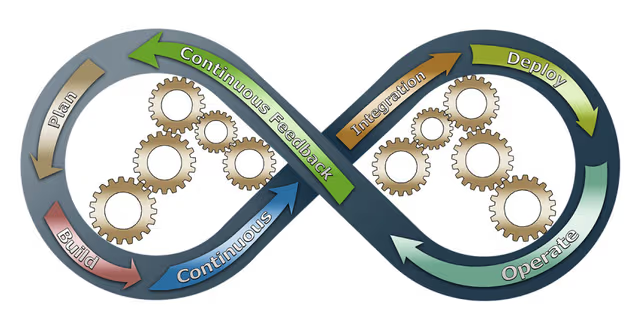
The five stages illustrate a gradual journey from manual work to continuous improvement. Every organization progresses at a different pace, and not every team needs the same level of automation.
Focus on solving real problems, strengthening collaboration, and measuring results before moving to the next stage.
Comments
Join the discussionNo comments yet. Be the first to comment.